2026 Chevrolet Silverado 1500 vs 2026 Toyota Tundra: Why Silverado Is the Better Full-Size Truck in Ontario
Choosing between a Silverado 1500 and a Tundra usually comes down to how a truck gets used week to week, not which one looks tougher parked on a gravel driveway. Ontario buyers cross-shopping these two full-size pickups want real answers on towing, cab options and everyday drivability. Here is how the 2026 Silverado 1500 stacks […]
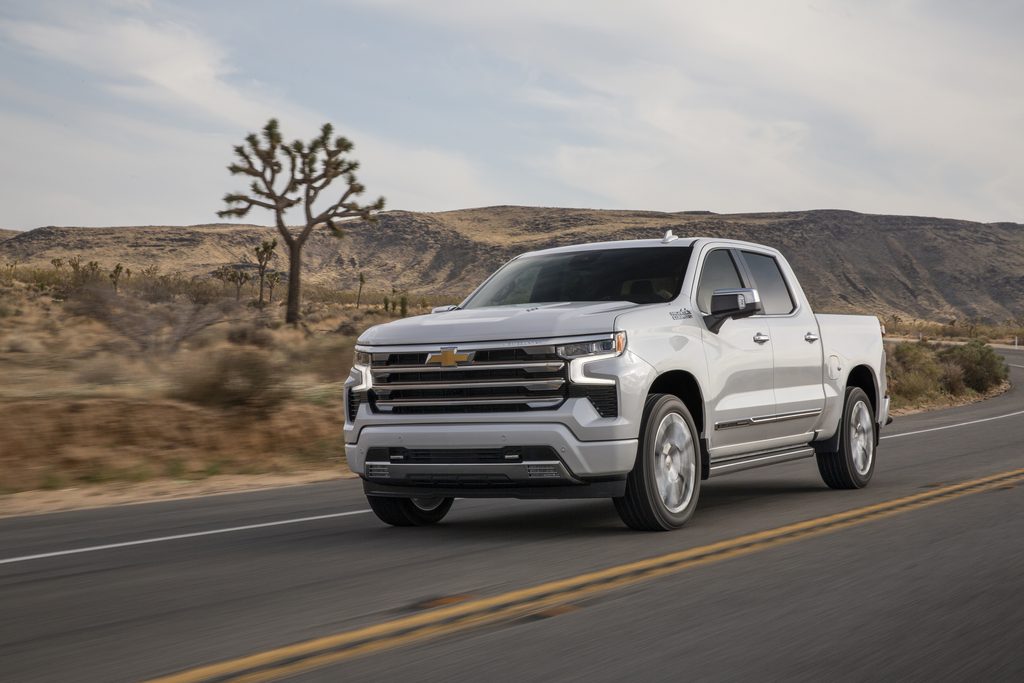
Choosing between a Silverado 1500 and a Tundra usually comes down to how a truck gets used week to week, not which one looks tougher parked on a gravel driveway. Ontario buyers cross-shopping these two full-size pickups want real answers on towing, cab options and everyday drivability. Here is how the 2026 Silverado 1500 stacks up against the Tundra on the details that matter most.
How the Silverado 1500 and Tundra Compare
| Category | Silverado 1500 | Tundra |
| Max conventional towing | 13,300 lbs (6,033 kg) (Double Cab, Max Trailering Package) | 11,089 lbs (5,030 kg) (Double Cab SR5 L) |
| Payload | 2,174 lbs (986 kg) (WT) | 1,940 lbs (880 kg) (SR 4×2 Regular Bed) |
| Seating | Up to 6 (bench-seat trims) | 5 |
| Engine choices | 4 (turbo I4, two V8s, turbo-diesel I6) | 1 V6 architecture (gas or hybrid tune) |
| Fuel tank capacity | 91 L | 122 L |
Engine Choices Built Around How You Tow and Haul
The Silverado 1500 spreads its power across four distinct engines, so the choice matches the job instead of forcing every buyer into one architecture.
The 2.7L TurboMax turbocharged four-cylinder is the efficiency-minded starting point, making 310 hp and 430 lb-ft of torque and towing up to 9,200 lbs (4,173 kg). Step up to the 5.3L EcoTec3 V8 for a balanced option: 355 hp, 383 lb-ft, and a 9,300 lbs (4,218 kg) tow rating, the highest gas-engine figure in the lineup.
For heavy-duty use, the 6.2L EcoTec3 V8 makes 420 hp and 460 lb-ft, while the 3.0L Duramax Turbo Diesel inline-six trades some horsepower for 495 lb-ft and a diesel exhaust brake that engages automatically in Tow/Haul mode, useful on grades with a loaded trailer.
The Tundra centres on one 3.4L twin-turbo V6, tuned to 358 hp and 406 lb-ft on most trims or 389 hp and 479 lb-ft on the SR5 L, plus a 437 hp, 583 lb-ft hybrid version on CrewMax Limited and up. That hybrid figure is the strongest number on this page, but it only arrives in one body style near the top of the Tundra price range.
The Silverado’s four-engine spread means a buyer gets a diesel or a V8 without moving up to a flagship trim first.
Cabs, Beds and Seating That Match the Job
Configuration flexibility is where the Silverado pulls furthest ahead. The lineup runs through Regular Cab, Double Cab and Crew Cab body styles, each available with Short, Standard or Long bed choices and both 2WD and 4WD on most trims. Bench-seat configurations on WT, Custom and Custom Trail Boss trims seat up to 6, with front under-seat storage built into the 40/20/40 split bench.
The Tundra offers two cab styles, Double Cab or CrewMax, each in Regular or Long Bed lengths, and seats 5 across the lineup. That covers most crews, but the Silverado’s extra body style and bench-seat option split jobsite crews, growing families and weekend haulers into more combinations than the Tundra’s two-cab structure allows.
Trailering Tech for Regular Haulers
Both trucks build in trailer-specific hardware, but the Silverado’s list runs deeper across more trims. Standard equipment includes Trailer Sway Control through StabiliTrak, Tow/Haul Mode with grade braking, and Hitch Guidance. Available features add an Integrated Trailer Brake Controller, Trailer Side Blind Zone Alert, an in-vehicle trailering app with pre-departure checklists and tire pressure monitoring, and up to 8 cameras delivering 14 views, including Hitch View, Bed View, Transparent Trailer View and a Jack-Knife Alert.
The Tundra’s Platinum and Capstone grades add a Panoramic View Monitor and Trailer Backup Guide with Straight Path Assist, useful for backing a trailer solo. But those features sit on the Tundra’s top two trims only, while the Silverado’s camera suite and trailering app scale down into the LT and RST range, putting the same hitching and reversing help within reach of buyers who are not paying for the priciest cab.
Cabin Comfort and Display Upgrades
Passenger space favours the Silverado’s front row: 1,093 mm of headroom, 1,131 mm of legroom and 1,677 mm of shoulder room in the WT cabin, all ahead of the Tundra Double Cab’s 1,042 mm, 1,047 mm and 1,651 mm. On longer highway stretches, that extra room adds up.
Technology follows a similar upgrade path. The Silverado moves from a 7-inch touchscreen on WT to a 13.4-inch Chevrolet Infotainment 3 Premium display with Google built-in and a 12.3-inch reconfigurable Driver Information Centre starting at LT, with ZR2 adding a 15-inch Head-Up Display. The Tundra reserves its largest 14-inch touchscreen and 12-speaker JBL audio for the Platinum and Capstone grades.
Toyota’s screen edges out the Silverado’s on size, but Chevrolet gets a premium display and Google integration into buyers’ hands several trims earlier, without requiring the Tundra’s most expensive cab.
Off-Road Trims: Lifestyle Look or Real Capability
Both automakers build dedicated off-road trims, but they solve traction differently. The Tundra’s TRD Off-Road and TRD Pro grades add Crawl Control, Multi-Terrain Select, Downhill Assist Control and a locking rear differential, with TRD Pro stepping up to a 1.1-inch front lift and FOX internal bypass coil-overs.
The Silverado’s Custom Trail Boss and LT Trail Boss trims answer with a 51 mm factory suspension lift, the Z71 Off-Road Package and a two-speed Autotrac transfer case. ZR2 goes further, pairing that 51 mm lift with Multimatic DSSV dampers and front and rear electronic locking differentials, plus 33-inch Goodyear Wrangler Territory MT tires. That front-axle lock is the detail the Tundra’s TRD lineup does not extend to, since Toyota’s system locks the rear only.
For low-speed articulation on rock or mud, having both axles lock gives the ZR2 an edge the badge alone does not explain.
Why the Silverado 1500 Fits Ontario Drivers
For a buyer weighing these two full-size trucks, the Silverado 1500’s case comes down to range and flexibility. Four engines cover everything from daily-driver efficiency to diesel-grade towing, without forcing a jump to the top trim. A 13,300 lbs (6,033 kg) max tow rating, deeper trailering tech across more trims, and a wider spread of cab, bed and seating combinations mean the truck flexes to the job, not the other way around.
Add in more front-row space for long highway stretches and a front-and-rear locking differential on ZR2 that the Tundra’s off-road trims do not match, and the Silverado 1500 covers more of what Ontario truck buyers actually do: towing, hauling, commuting and the occasional trail. That range of strengths makes it the stronger full-size pickup for anyone who needs one truck to handle several different jobs.
Find Your Silverado 1500 at Nurse Chevrolet
The 2026 Silverado 1500 pairs four engine options with multiple cab, bed and seating configurations, giving Ontario truck buyers a full-size pickup that covers towing, hauling and daily driving without compromise on any of them.
Visit Nurse Chevrolet in Whitby to see the Silverado 1500’s engine and configuration options in person, and work with our team to find the trim that matches how you actually use a truck.