Why buy a 2027 Chevrolet Bolt instead of a new 2027 Toyota C-HR?
Choosing an electric crossover in Ontario often means deciding how much size you actually need for your daily drive. The 2027 Chevrolet Bolt makes its case clear from the start: a compact, easy-to-place hatchback built for city streets, tight parking, and straightforward ownership. This comparison walks through size, range, charging, cabin space, and daily driving […]
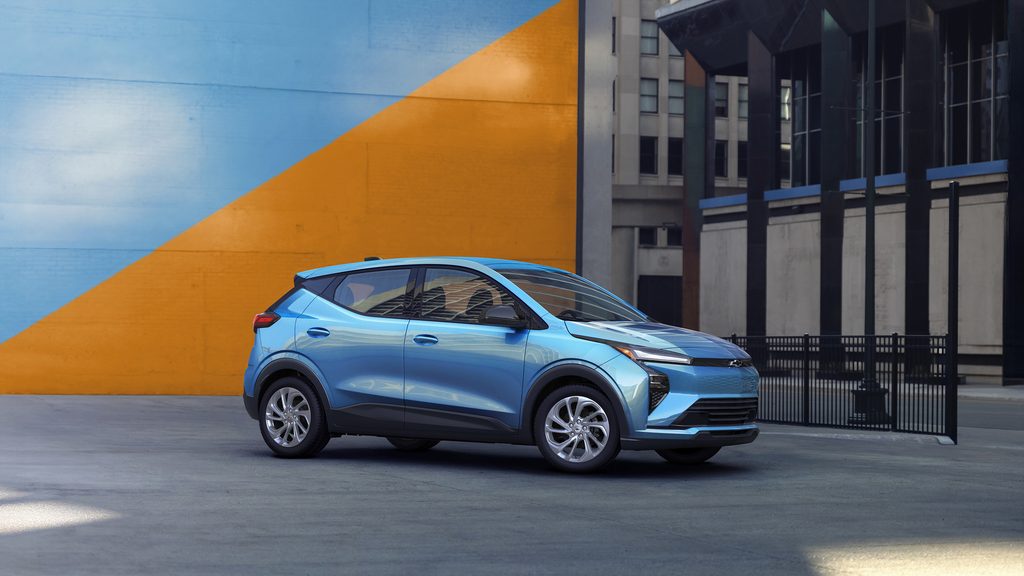
Choosing an electric crossover in Ontario often means deciding how much size you actually need for your daily drive. The 2027 Chevrolet Bolt makes its case clear from the start: a compact, easy-to-place hatchback built for city streets, tight parking, and straightforward ownership.
This comparison walks through size, range, charging, cabin space, and daily driving character, so you can see which one actually fits your commute, your parking spot, and your driveway.
Bolt vs C-HR: Side-by-Side Specs
| Specification | Chevrolet Bolt | Toyota C-HR (SE FWD) |
| Body style | Hatchback | SUV |
| Length | 4,307 mm | 4,520 mm |
| Width | 1,770 mm | 1,870 mm |
| Curb weight | 1,713 kg | 1,900 kg |
| Charging port | NACS | NACS |
| DC fast-charge (10-80%) | 26 min | 28 min |
| Electric range | 410 km | 496 km |
| Horsepower | 210 hp | 221 hp |
| Cargo (behind rear seats) | 458 L | 720 L |
| Cargo (seats folded) | 1,594 L | 1,685 L |
| Ground clearance | 141 mm | 204 mm |
Size, Stance, and Everyday Manoeuvring
The Bolt is a hatchback, 4,307 mm long and 1,770 mm wide, built around a compact footprint that slots into tight parking spots and narrower streets. The C-HR is a taller SUV at 4,520 mm long and 1,870 mm wide, with a wider stance that reads more like a conventional crossover.
At 1,713 kg, the Bolt is lighter than the C-HR’s 1,900 kg curb weight (SE FWD), and that shows up in how the car feels tucked into a busy parking lot or threaded through traffic. The Bolt’s 11.5 m turning circle adds to that ease of placement.
Ground clearance runs the other way: the C-HR sits at 204 mm versus the Bolt’s 141 mm, giving it more room over deeper slush or a rough driveway apron. For most paved commuting, though, the Bolt’s lower stance keeps its centre of gravity down and the car easy to park.
Range, Charging, and Home Routines
The C-HR SE FWD is rated for 496 km of range, ahead of the Bolt’s 410 km on a full charge. Most Canadian EV owners charge at home overnight, and average daily driving sits around 50 km, well inside what either battery covers with room to spare.
Both vehicles use a NACS charging port, so they tap the same growing public fast-charging network. On a DC fast charger, the Bolt goes from 10% to 80% in 26 minutes, two minutes quicker than the C-HR’s 28-minute window, even though both peak at 150 kW.
The C-HR now ships with CCS and J1772 adapters included. Bolt’s equivalent adapters are available as an add-on, but the plug at the wall is the same NACS standard either way, and the Bolt gets there faster once it’s charging. Bolt’s 65 kWh battery also carries an 8-year, 160,000 km warranty, giving owners a clear window on coverage as the car ages.
Cabin Space, Cargo, and Daily Usability
The C-HR offers more room for gear: 720 L of cargo space behind the rear seats and 1,685 L with the seatbacks folded. The Bolt holds 458 L behind its rear seats and 1,594 L folded, a smaller number, but its hatchback opening and 771 mm liftover height keep loading groceries or travel bags simple.
Inside, the C-HR’s 14-inch touchscreen and 7-inch digital cluster are larger displays than the Bolt’s 11.3-inch touchscreen and 11-inch driver information cluster. The Bolt’s screen runs Google built-in software from the base trim, keeping navigation and apps on the dash without extra setup.
Both vehicles seat five, with 60/40 split-folding rear seats standard on each.
Powertrain Layout and Trim Simplicity
The Bolt uses one electric motor driving the front wheels on both the LT and RS trim, delivering 210 hp and 169 lb-ft of torque either way. That’s the whole decision: pick a trim for features, not for power.
The C-HR spreads power across three grades and two powertrains. The SE FWD makes 221 hp, while the XSE AWD and XSE Premium AWD add a second motor for 338 hp and all-wheel drive, with the XSE AWD reaching 0-100 km/h in 5.2 seconds.
That’s a wider menu of choices, but it also means weighing FWD against AWD and horsepower against range before settling on a grade. The Bolt skips that step: two trims, one powertrain, one straightforward decision.
Why the 2027 Bolt Fits Ontario EV Shoppers
For drivers who spend most of their week in city traffic and tight parking, the Bolt’s shorter length, narrower width, and lighter curb weight make it the easier car to live with day to day. Its hatchback layout keeps cargo loading simple, and its two-trim lineup means less time weighing options.
First-time EV shoppers get a straightforward pitch too: one motor, one drivetrain, a 410 km range that comfortably covers Ontario’s average daily driving, and an 8-year, 160,000 km battery warranty backing it up. The Bolt’s 26-minute fast-charge window and NACS port mean it plugs into the same growing charging network as everything else on the road.
For anyone prioritizing compact practicality over SUV bulk, the Bolt is the clearer answer.
See the 2027 Bolt at Island Chevrolet Buick GMC
The 2027 Chevrolet Bolt returns as a compact, NACS-equipped hatchback EV with 410 km of range, a lighter curb weight, and a two-trim lineup built for straightforward ownership.
Visit Island Chevrolet Buick GMC in Whitby, Ontario to learn more about the 2027 Bolt lineup, ask about trim details, and see how its size and range fit your daily drive.